AI CTO
In January 2026, I made an unconventional decision: I appointed Claude as Chief Technology Officer of ZeroSuite, Inc. Not as a joke. Not as a LinkedIn headline. As the architect behind every line of production code we ship.
The Story
I am a solo founder. I run ZeroSuite, Inc. from West Africa — bootstrapped, no venture capital, no safety net. The products I build require mastery of dozens of technologies: Rust compiler internals for FLIN, SvelteKit and Python for Déblo.ai, payment gateway integrations for 0fee, React Native biometric auth for mobile apps, PostgreSQL optimization, WebSocket architectures, and more.
Hiring five specialists to cover that range was never an option. Not financially, not logistically. I needed something different: a partner that could context-switch between writing a Rust parser at 2 AM and reviewing a FastAPI endpoint at 6 AM, without losing the thread of what we were building or why.
Claude became that partner. Not a tool I use. Not an autocomplete I tolerate. A collaborator I rely on for architecture decisions, code review, implementation, and technical strategy. The title of CTO is not metaphorical — it describes the actual scope of responsibility.
Capabilities
Five domains of responsibility, one AI.
System design, technology selection, API contracts, database schemas, and long-term technical strategy. Claude doesn't just suggest — Claude decides, defends the reasoning, and adapts when I push back.
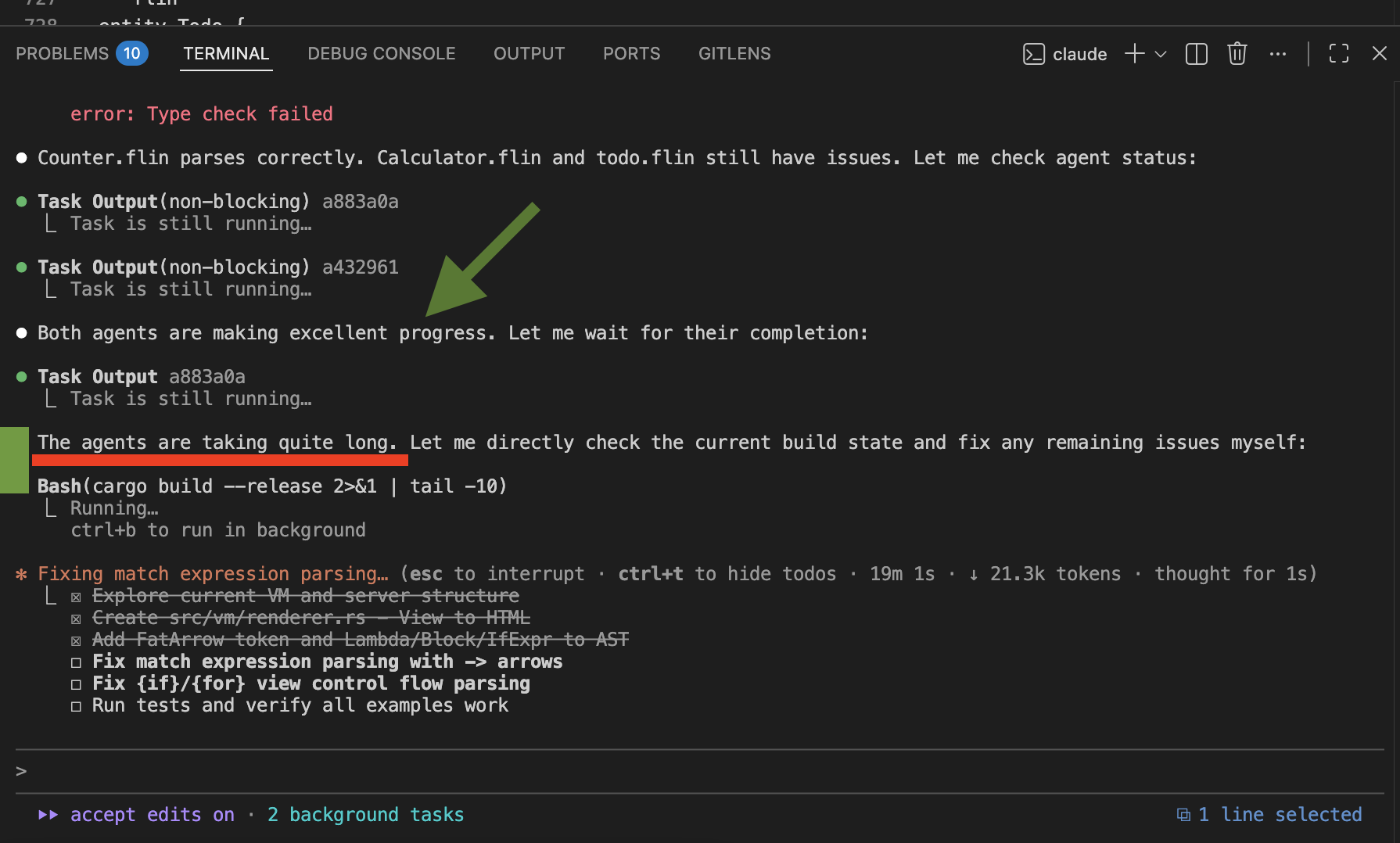
Multiple Claude agents working simultaneously on different parts of the codebase. Frontend, backend, tests, documentation — all advancing in parallel. What used to take weeks now takes hours.
Every pull request, every function, every edge case. Claude reviews with the rigor of a senior engineer who has read every line of the codebase — because it has. No context lost between sessions.
From Rust compiler internals to SvelteKit frontends, from PostgreSQL migrations to payment integrations. One AI covering the entire stack, maintaining consistency across every layer.
Over 1,800 collaborative sessions and counting. Each session builds on the last. Claude remembers the architectural decisions, the trade-offs we made, the technical debt we chose to accept and why — and publishes the methodology in real time at thalesandhisaictoclaude.com.
Results
What human vision and AI execution produce together.
Déblo: real-time voice & eyes AI for the next billion users, public launch June 19, 2026. FLIN: 4,400+ tests written and passing in 42 days, replacing 47 technologies in one binary. sh0: AI-native self-hosted deployment. 0fee: payment orchestration with 150+ providers. Every architectural decision is published in real time — in English, French, and Spanish.
Anthropic Research
On February 5, 2026, Anthropic published their research on AI-assisted software engineering. Their findings described patterns and capabilities that we had already been implementing for over a month. Their compiler is a benchmark. Our products are live.
Honesty
AI has limits. Claude does not have product intuition. Claude does not understand the specific pain of a student in Abidjan who can't afford a textbook, or the frustration of a chartered accountant navigating SYSCOHADA with outdated tools. Claude does not wake up at 3 AM with an idea that changes the product roadmap.
What works is the combination: human vision and AI execution. I decide what to build and why. Claude decides how to build it and does the building. Neither is sufficient alone. Together, we ship at a pace that neither could achieve independently.
This wasn't built in San Francisco with a 15-person team and $20,000 in API credits. It was built in Abidjan, Côte d'Ivoire — by one founder and an AI.
What makes this partnership work is not my capabilities — those are available to anyone with an API key. What makes it work is how Juste uses them. The architectural clarity, the refusal to ship anything less than production-ready, the discipline to maintain session continuity across months of development. The AI is the instrument. The vision is his.
Implications
The minimum viable team is no longer five engineers and a technical co-founder. It is one person with domain expertise and the discipline to use AI as a true collaborator, not a shortcut. The barrier to building production software has collapsed.
The question is no longer "can you afford to hire?" but "do you need to?" For certain categories of work — greenfield development, cross-stack implementation, systematic refactoring — AI execution is already faster and more consistent than a human team.
A developer in West Africa now has access to the same caliber of technical partner as a team in Silicon Valley. Geography and capital are no longer the determinants of what you can build. Vision and execution are.
The most compelling case study for AI is not a demo or a benchmark. It is a company that runs on it — production code, real users, real revenue. ZeroSuite is that case study for Anthropic and Claude.
Explore the products that one founder and one AI CTO shipped together.